
615 North Sherman Ave Ste 22 Madison, WI 53704
(608) 233-3588
Acupuncture that finds
what other practitioners miss.
Whether you're coming specifically for acupuncture or exploring it as part of a broader approach to your health — you're in the right place. Many of our patients come solely for acupuncture and nothing else. We're glad to help either way.
"After this many years, it doesn't bother me at all if someone only wants acupuncture. I'm happy to help in whatever way is most useful for you." — Dr. Dow
First session offer
$37
Your first acupuncture session — no obligation beyond that.
What's included
Consultation with Dr. Dow — your history, what you're dealing with, what you're hoping for
Health assessment to evaluate your specific situation
Your first full acupuncture treatment
Custom treatment plan with honest recommendations for your situation
No pressure to pursue any other services — acupuncture alone is a complete offering here
How acupuncture works
Think of it as finding bubbles of trapped energy —
and releasing them.
Acupuncture works by identifying points in the body where energy has become blocked or accumulated — and releasing that accumulation so the system can rebalance and heal.
The most accessible analogy: imagine the body's energy pathways as plumbing. A subluxation or injury lets energy in — but if the plumbing is clogged, that energy can't flow out. It builds up, creating tension, pain, and dysfunction. Acupuncture finds those accumulations — like bubbles of trapped pressure — and releases them. The relief that follows isn't coincidental. It's the system finally moving again.
What that feels like in practice
When a needle finds the right point — what acupuncturists call "de qi" — patients often feel a distinct sensation: electrical, like a small spark. Or pressure. Or heaviness. That sensation tells us we've found the right spot and the energy is releasing.
Some patients are surprised by how specific it feels — how clearly they can sense something happening at a precise location. That specificity is the point. Acupuncture isn't approximate. When it's done well, it's exact.
After this many years, patients regularly tell Dr. Dow he finds the acupuncture points more precisely than any practitioner they've worked with before. That level of precision comes from experience — and from understanding the body from multiple clinical perspectives simultaneously.
Why the practitioner matters more than people realize
Not all acupuncture is the same — and the difference is significant
In Wisconsin and across the US, "dry needling" — a technique that uses acupuncture needles — can be performed by physical therapists and other practitioners after as few as 40–100 hours of training.
A certified acupuncturist completes approximately 2,400 hours of dedicated training. Dr. Dow completed 3,200 hours — including 800 hours of one-on-one work study with his acupuncture teacher during chiropractic school, where the depth of learning was unlike anything available in a standard program.
Combined with a doctorate in chiropractic, 31 years of clinical practice, and a neurological understanding of how the body's systems connect — the result is a practitioner who approaches acupuncture from a depth that most acupuncturists, let alone dry needlers, simply don't have.
3,200 Acupuncture training hours
800 One-on-one hours with master practitioner
4,200 Chiropractic doctoral hours
31 Years of clinical practice
The numbers aren't meant to impress. They're context for why patients who have tried acupuncture elsewhere and felt uncertain about the results often have a different experience here.
What acupuncture addresses
A broader range of applications
than most people expect.
Acupuncture is often associated with chronic pain — and it's highly effective there. But the range of conditions it addresses is significantly broader, particularly in the hands of a practitioner who understands the neurological and musculoskeletal dimensions of each presentation.

Acute pain crisis
When pain is so severe the patient can barely move or relax — needles reduce tension and muscle spasm before anything else is possible
When adjustment isn't possible
Spinal fusion, acute injury, severe muscle guarding — acupuncture provides a pathway when other approaches aren't available
Chronic pain
Back pain, neck pain, sciatica, joint pain, headaches — releasing accumulated energy that conventional treatment hasn't addressed
Post-surgery & trauma
Neurological pathways get disorganized after surgery or trauma — acupuncture helps reconnect and reorganize them, sometimes years after the original event
Stress & nervous system
Dysregulated nervous system, anxiety, chronic stress — acupuncture works directly on parasympathetic function and nervous system tone
Musculoskeletal conditions
Sports injuries, muscle tension, restricted mobility — particularly effective with the combined neurological and chiropractic perspective Dr. Dow brings
About the needles — for anyone who is apprehensive
Acupuncture needles are remarkably fine — far thinner than a standard injection needle. Most patients feel the tube used to guide the needle into place, not the needle itself. For first-time patients, Dr. Dow typically begins face-down so you don't see what's happening — which most people find makes the experience significantly more comfortable.
When a needle finds the right point, you may feel a brief electrical sensation, a sense of pressure, or heaviness at that location. That's the de qi response — it tells us the energy is releasing. Patients who were most apprehensive before their first session are often among those who return most consistently.
For patients open to an integrated approach
Acupuncture alongside chiropractic and laser — when the combination matters
While many patients come solely for acupuncture, the treatment becomes particularly powerful when combined with other modalities. Acupuncture is especially effective early in chiropractic care — reducing acute muscle spasm and excess tissue tone so that adjustments can be received more completely.
One of the more remarkable combinations is acupuncture alongside Class 4 laser therapy — needles placed at specific points while the laser delivers photobiomodulation energy simultaneously. The effect is synergistic in a way that neither treatment alone produces. Think of it as a modern version of moxibustion — the traditional practice of applying heat to acupuncture points to enhance their effect.
If you come in solely for acupuncture, that's exactly what you'll receive. If at some point you're curious about how it might work alongside other care, that conversation is always available — without pressure.
Your first visit
What happens when you come in
We start with your situation
Dr. Dow will sit down with you first — what's been going on, how long, what you've tried. Whether you have a specific condition or a general sense that something is off and you want to try acupuncture, that conversation shapes the treatment.
Health assessment
A thorough evaluation of your specific presentation — understanding the pattern of what you're experiencing before choosing points. Good acupuncture isn't a standard protocol applied to everyone. It's specific to you.
Your first treatment
Most patients are surprised by how comfortable and relaxing the experience is — particularly for those who were apprehensive about needles. Many notice a meaningful change during or immediately after their first session. Others experience a cumulative effect over several treatments. Dr. Dow will give you an honest picture of what to expect for your specific situation.
A clear plan — whatever direction makes sense for you
We'll walk you through what we found and what we'd recommend — including how many sessions and what to expect. If acupuncture alone is the right approach for you, that's what we'll recommend. No obligation to pursue anything beyond what you came for.
An honest note
What acupuncture can and can't do
Acupuncture produces real, meaningful results for a wide range of conditions — particularly pain, nervous system regulation, and recovery from injury or trauma. In skilled hands with appropriate conditions, the results can be significant and sometimes immediate.
Some conditions respond quickly. Others require a series of treatments before meaningful progress accumulates. Some patients — particularly those with long-standing, deeply ingrained energy blockages — need several sessions just to get things moving before the real work begins.
We'll tell you honestly at your first visit what's realistic for your situation and what a reasonable course of treatment looks like. No overselling — just an accurate picture of what we can offer and what to expect.
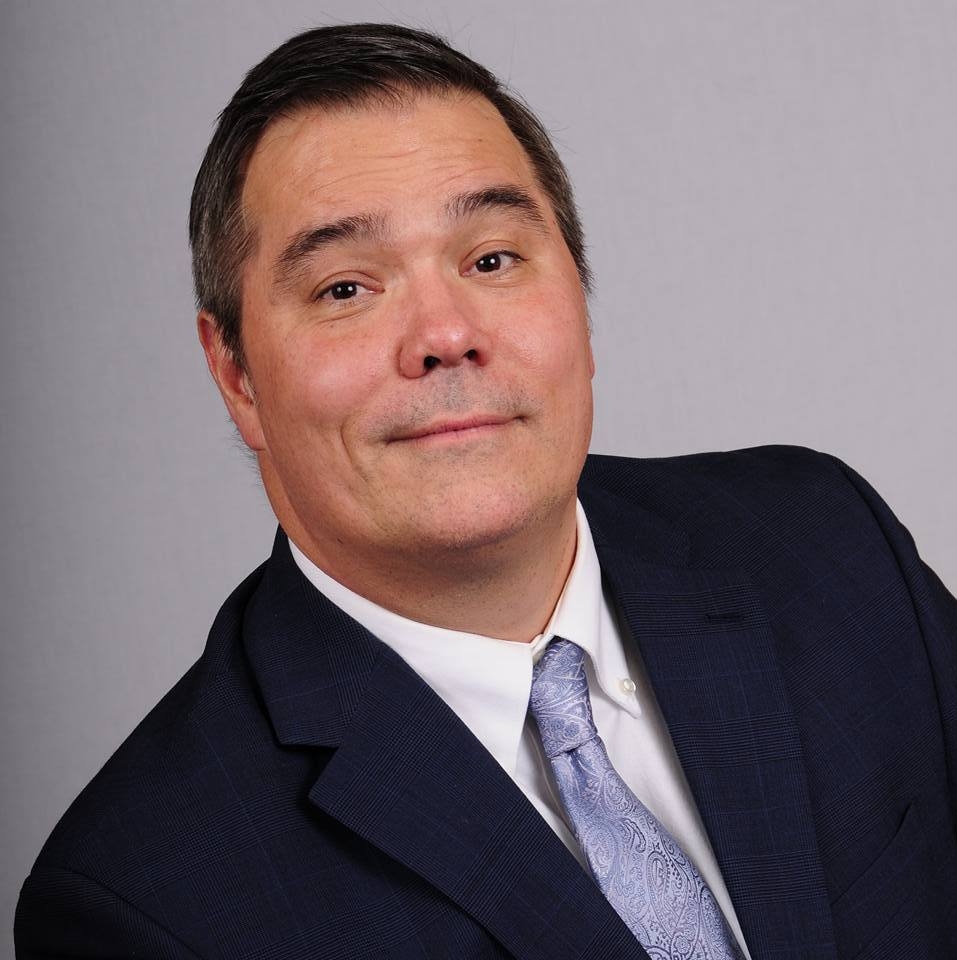
Dr. Dow
Licensed Acupuncturist · Chiropractor · Dow Chiropractic & Acupuncture, Madison WI
I went back to acupuncture school after finishing my chiropractic doctorate — three more years of dedicated training — because I wanted to understand it properly, not just apply it as an add-on technique. The 800 hours I spent one-on-one with my acupuncture teacher during chiropractic school taught me more than I could have learned any other way. After 31 years of clinical practice combining both disciplines, what I've come to understand is that the body's energy systems and its structural and neurological systems are the same system described differently. When you treat one, you affect the other. That's what makes this work — and why patients who come in for acupuncture and stay out of curiosity often find something they weren't expecting.
Common questions
I've tried acupuncture before and didn't get much from it — why would this be different?
The most common reason acupuncture doesn't produce the expected results is practitioner precision — finding the right points accurately makes an enormous difference in outcome. Dr. Dow's 3,200 hours of acupuncture training, combined with his neurological and chiropractic background, allows for a level of specificity in point selection and needle placement that most practitioners — including many certified acupuncturists — don't have. Patients who felt uncertain about their previous experience regularly have a different one here.
What's the difference between acupuncture and dry needling?
Dry needling uses acupuncture needles but is typically performed by physical therapists or other practitioners after 40–100 hours of training. It focuses primarily on trigger points in muscle tissue. Acupuncture is a complete medical system with thousands of years of clinical development, requiring approximately 2,400 hours of training for certification. Dr. Dow completed 3,200 hours — and brings a chiropractic doctorate and neurological understanding to every treatment.
I'm nervous about needles — is that a problem?
It's very common. Acupuncture needles are extraordinarily fine — most patients feel the guide tube, not the needle. Dr. Dow typically begins face-down for first-time patients so you're not watching what's happening, which most people find makes a significant difference. When you do feel something — a brief electrical sensation, pressure, or heaviness — that's actually a good sign. It means the needle found the right spot.
Do I have to be interested in chiropractic to come here?
Not at all. Many patients come solely for acupuncture and nothing else — and that's completely fine. After 31 years in practice, Dr. Dow is genuinely happy to help in whatever way is most useful for you, without any expectation that you'll pursue other services.
Can acupuncture help after surgery or a traumatic injury?
Yes — and this is one of the more underappreciated applications. Surgery and trauma disorganize the body's neurological pathways. Acupuncture helps reconnect and reorganize those pathways — sometimes producing meaningful improvement years after the original event, in situations where conventional medicine has limited further options.
How many sessions will I need?
It depends on the condition and how long it's been present. Some patients notice significant change after one session. Others need several treatments before momentum builds — particularly for long-standing conditions where energy has been blocked for years. Dr. Dow will give you an honest assessment at your first visit.
From patients
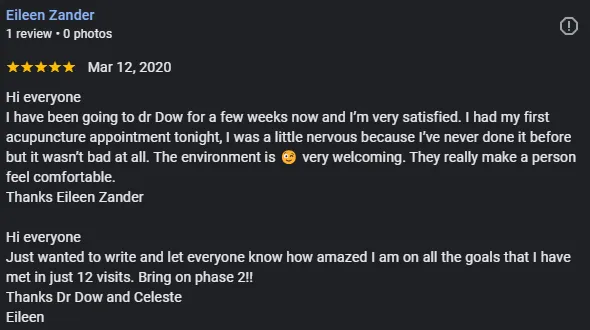

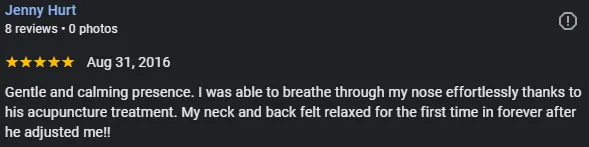
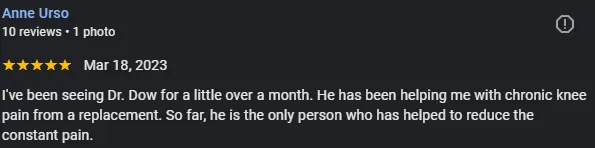
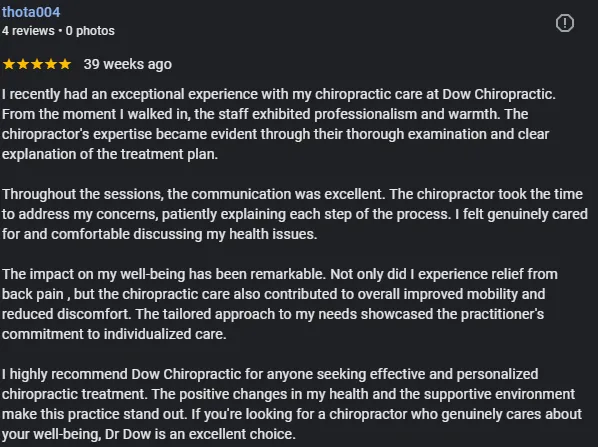
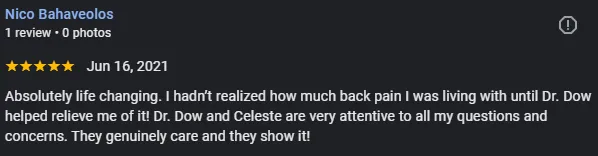
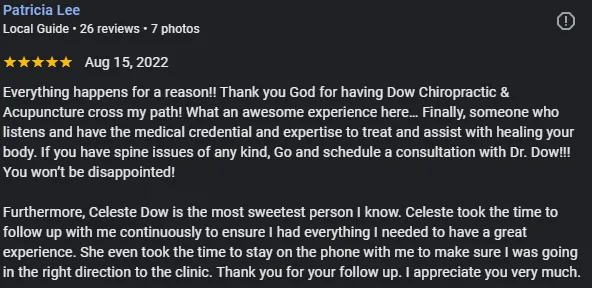
Acupuncture Videos: From Dr. Dow
Whether you're here for acupuncture alone
or curious about more — you're welcome.
The first session is $37 and includes a full consultation, health assessment, and your first treatment. No pressure beyond that visit. We'd rather earn your trust than fill a schedule.

615 North Sherman Ave Ste 22 Madison, WI 53704
(608) 233-3588
www.DowChiropractic.com
[email protected]
all content on this page shall not be used in any unauthorized development or recreation of content or pages similar.
this offer is limited to new patients only and has a limit of one purchase per person for the initial $37 payment offer. Additional sessions are available from the office directly at an additional cost per treatment which is outlined at the time of your initial appointment.